
Smart water metering
Read water meters remotely, track consumption by zone and flag possible leaks for inspection.
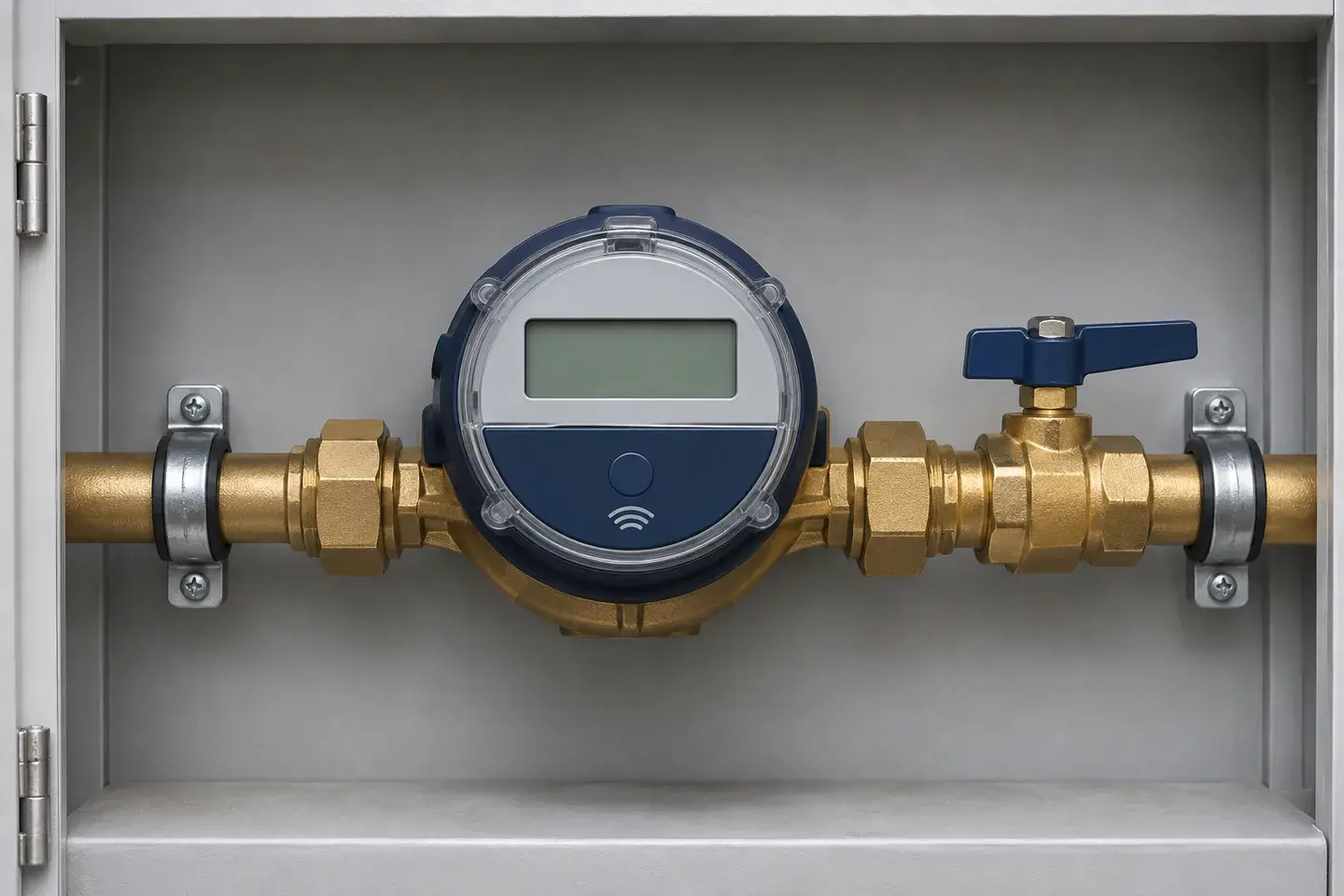
Smart water metering
Advanced metering infrastructure (AMI) collects readings from meters or interface modules. Timestamped readings support consumption comparisons by zone and help identify missing data or unusual flow patterns.
Problems and needs
Manual reading takes time at scattered or inaccessible meters.
Sustained low flow outside operating hours can warrant a leak inspection.
Communication gaps need to be distinguished from intervals with genuinely zero consumption.
How it works
- 1
The meter records cumulative volume. The meter or its interface sends readings and status at configured intervals.
- 2
The communications network and collector deliver messages to the platform, where readings are matched to meter locations.
- 3
The platform reports trends and flags threshold breaches. Operators review readings and site conditions before diagnosing the cause.
System architecture (conceptual)
- Meter or reading module
- Communications network
- Gateway or collector
- Readings and alerts
Conceptual diagram only; a real design depends on each project.
System components
- Meter and remote-reading interface matched to pipe size, flow range and installation conditions.
- Communications for the chosen interface, such as LoRaWAN with gateways or wired M-Bus with a suitable collector.
- A platform for device management, readings, alerts and access control.
Benefits
- Reduce site visits for routine readings where connectivity is reliable.
- Prioritize meters with missing data or unusual consumption.
- Retain a reading history for troubleshooting and trend analysis.
Use cases
Buildings and housing complexes that need consumption figures by floor, zone or meter.
Factories comparing shifts and checking for after-hours flow.
Water utilities comparing district inlet volume with downstream readings over the same interval.
Suitable products
Products in the real Hoang Phuc Corp catalog that can be used in this solution. Suitability is cross-checked against published specifications; items labelled “Technical confirmation needed” require further consulting.
No catalog product has been identified as suitable for this solution yet.
Discuss connectivity with Hoang Phuc
When contacting Hoang Phuc, share the meter location plan, installed models, collector interfaces and site network diagram if available. These inputs help evaluate communications options and identify what needs a site survey.
Reference implementation process
Generic reference steps; not a delivery commitment nor a description of an executed project.
- 1
Inventory metering points, pipe sizes, cabinet or pit conditions and reporting needs.
- 2
Survey coverage at the installation points, especially under metal lids, in deep pits and in basements. Validate each model's interface and reporting interval.
- 3
Pilot a group of meters. Reconcile local and remote readings and check dropout and alert handling before expanding.
FAQ
Must every existing meter be replaced?
It depends on the model. If a meter has a supported output or reading module, a retrofit may be an option.
Does a continuous-flow alert prove a leak?
An alert identifies where to investigate. Check normal site usage, data quality and field conditions before drawing a conclusion.
Need solution consulting?
Send your requirements and the Hoang Phuc Corp team will advise on a suitable configuration and products.